AI Coding tool profile
Google Gemini
Google's multimodal AI workspace and API suite for text, code, images, audio, and reasoning, powered by Gemini 3.8 and 3.6 Flash models for creators and developers.
Independent research from official sources · Sources · How we review
- Best for
- Creators and developers who want Google's fast multimodal ecosystem for writing, research, analysis, and API-driven coding workflows.
- Starting point
- Free web access in the Gemini app (since Oct 9, 2026, users without a Google AI plan get Auto, which sends...
- Free plan
- Yes — Free tier includes web access to the Gemini app (Auto model selection by default since Oct 9, 2026, mostly Flash-Lite).
- Key limitation
- API list prices are usage-based and do not guarantee a fixed monthly bill or lower total cost for every workflow.
Choose it if
Strongest for
Built for
Avoid it if
- Google's benchmark and capability claims are vendor-reported; client compatibility, latency, tool reliability, and output quality require an independent test.
- The model accepts text, image, video, audio, and PDF inputs but produces text output; it is not a video, image, or audio generation model.
- Model access, quotas, terms, pricing modes, and provider integrations can change; verify the current documentation before production use.
Free-plan suitability
Free tier includes web access to the Gemini app (Auto model selection by default since Oct 9, 2026, mostly Flash-Lite), free developer API token tiers on Google AI Studio, 12 months free Google AI plan for verified college students, and 18 months free Gemini Pro for eligible Jio users in India (plans ₹349+).
Pricing
Free web access in the Gemini app (since Oct 9, 2026, users without a Google AI plan get Auto, which sends most prompts to Flash-Lite and harder ones to Flash or Pro; with smart model selection off, every reply uses Flash-Lite, per Google's Gemini Apps Help, checked Oct 13, 2026); higher limits via paid Google AI plans (Plus, Pro, Ultra; prices vary by region). Verified offers include 12 months free Google AI for college students and 18 months free Gemini Pro via Reliance Jio in India. Gemini API has a free tier plus pay-per-token access (Gemini 3.1 Flash-Lite from $0.25 input / $1.50 output per 1M text tokens).
Verify the current plan, credits, output limits, and commercial terms before purchasing.
What Google Gemini does
- Current model endpoints: gemini-3.8-flash and gemini-3.6-flash
- 1,048,576-token input limit and 65,536-token output limit
- Multimodal inputs: text, image, video, audio, and PDF; structured text output
- Free 12-month student access and 18-month partner access (Jio India)
- Function calling, code execution, structured JSON outputs, and search grounding
- Configurable thinking budget with low, medium, and high reasoning effort
Is it legit?
Who is behind Google Gemini, where it is based, and what is publicly known about its funding. Company details change — verify on the official site before committing.
- Company
- Google DeepMind / Google
Evaluation guide
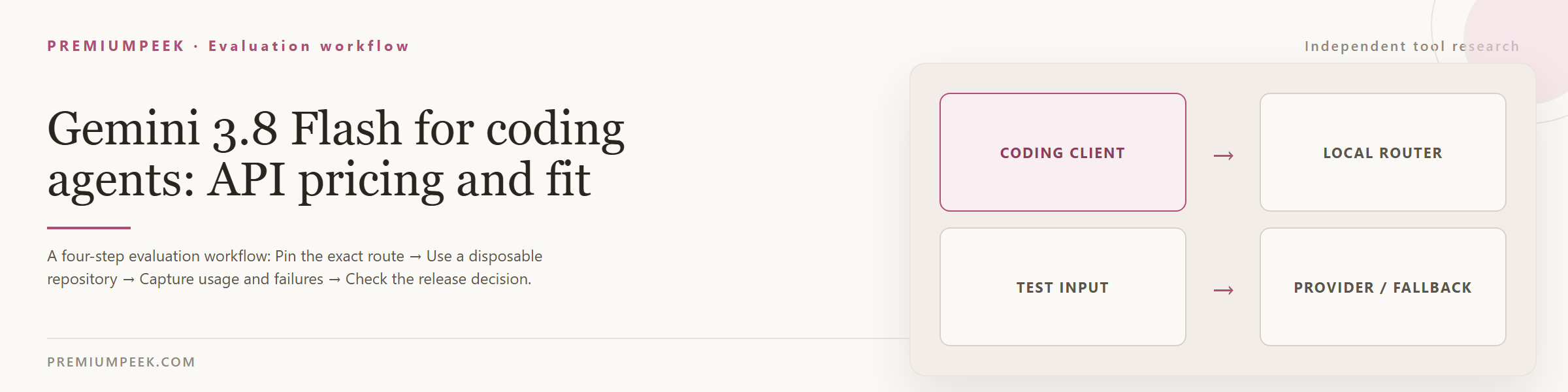
Step-by-step evaluation guides for Google Gemini — workflow fit, pricing, rights, and a same-input test before paying.
Official sources
These links are retained beside the catalog record so changing details can be rechecked.